
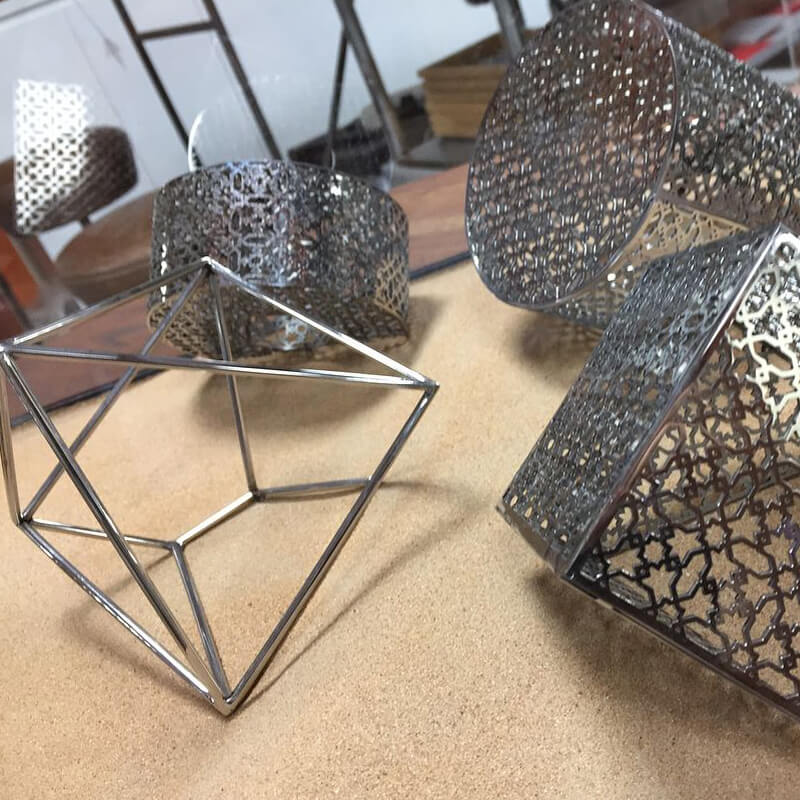
Every strong structure, every reliable machine, and every durable product starts with metal shaped by skilled hands and equipment. The way metal is cut, bent, joined, and finished determines how long it lasts and how well it performs under real conditions. Industries across the board rely on these techniques daily to produce parts and products that hold up.
Getting familiar with the core methods of metal fabrication in Dubai gives any business a clearer view of what their production truly needs.
Cutting
Cutting is the starting point of nearly every fabrication project. It involves removing material from a larger piece to create a shape that fits the required specification. Laser cutting delivers clean edges with excellent accuracy, plasma cutting handles thicker materials at speed, and water jet cutting works well on materials sensitive to heat.
Bending and forming
Once metal has been cut to size, bending shapes it into the required form. Press brakes are the most widely used machines for this process, applying controlled force to fold metal at precise angles. Forming takes this a step further by shaping metal into curves and complex profiles. Both techniques are used across industries to produce brackets, frames, enclosures, and structural components with consistent and repeatable results.
Welding
Welding fuses separate pieces of metal into a single strong unit. MIG, TIG, and stick welding are among the most widely applied methods, each suited to different materials, thicknesses, and finish requirements. A clean weld holds under stress, vibration, and load without cracking or separating. Welding is central to fabrication work across construction, manufacturing, and engineering, and the quality of the weld directly affects the strength of the finished product.
Casting
Casting involves pouring molten metal into a mould and allowing it to cool and solidify into the desired shape. This technique works well for producing complex shapes that would be difficult or costly to achieve through cutting and bending alone. It is widely used in the production of engine parts, pipe fittings, and industrial components where a specific form needs to be reproduced in volume with a good level of consistency.
Machining
Machining removes material from a metal workpiece using cutting tools to achieve a precise final shape. CNC machining automates this process using computer controlled equipment, delivering tight tolerances and high repeatability across large production runs. It is used to produce components where accuracy is critical and where manual methods would introduce too much variation.